
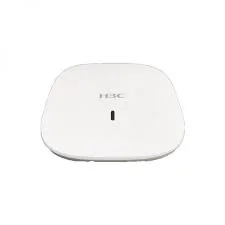
H3C · Wireless Access Point
H3C WA6320 Wi-Fi 6 Wireless Access Point Enterprise Office Dual Radio Indoor Wall/Ceiling-Mounted 802.11ax PoE…
Model: WA6320|Condition: Original New|Warranty: 1 year
H3C WA6320 — a wireless access point shipped from ImportGM's Shenzhen warehouse to channel partners, integrators and corporate IT departments worldwide. 802.11ax uses OFDMA to allow multiple users to transmit data simultaneously. OFDMA splits a channel into sub-channels, known as resource units (RUs), with specific subcarriers, and assigns RUs to different users for simultaneous transmission. OFDMA enables simultaneous multi-user transmission and reduces latency caused by channel contention. Core parameters include weight 0.4kg, dimensions (w × d × h) 185 mm × 185 mm × 33 mm. Original New units carry the 1 year ImportGM warranty; quotation, proforma invoice and export packing list are issued the same day.
- ✔Wi-Fi 6 (802.11ax) Standards
- ✔Orthogonal Frequency Division Multiple Access (OFDMA)
- ✔Dimensions (W × D × H)
- ✔1 x 100/1000M Ethernet, RJ-45, PoE input
- ✔1 × Management console port (RJ-45)
Bulk pricing available · Export packing & documentation · DHL / FedEx / air / sea freight
Technical Specifications
| Name | WA6320 |
|---|---|
| Weight | 0.4kg |
| Dimensions (W × D × H) | 185 mm × 185 mm × 33 mm |
| Interface | 1 x 100/1000M Ethernet, RJ-45, PoE input |
| Console port | 1 × Management console port (RJ-45) |
| PoE input | 1 x 100/1000M Ethernet, 802.3af |
| Local power supply | 54V DC |
| Antenna Type | Built-in omni-directional antenna |
| Antenna Gain | 5GHz peak gain: 6dBi 2.4GHz peak gain: 4dBi Note: The equivalent antenna gain is 5dBi in 5GHz, 3dBi in 2.4GHz |
| Built-in IoT Module | BLE5.0 |
| Frequency bands | 2.400to2.4835GHzISM 5.150to5.250GHzU-NII-1 5.250to5.350GHzU-NII-2A 5.470to5.725GHzU-NII-2C 5.725to5.850GHzU-NII-3/ISM Note: The available bands and channels are dependent on the configured regulatory domain (country) |
| Modulation technology | OFDM: BPSK@6/9Mbps, QPSK@12/18Mbps, 16-QAM@24Mbps, 64-QAM@48/54Mbps DSSS: DBPSK@1Mbps, DQPSK@2Mbps, CCK@5.5/11Mbps |
| Modulation mode | 11b: DSSS: CCK@5.5/11Mbps, DQPSK@2Mbps, DBPSK@1Mbps 11a/g: OFDM: 64QAM@48/54Mbps, 16QAM@24Mbps, QPSK@12/18Mbps, BPSK@6/9Mbps 11n: MIMO-OFDM: BPSK, QPSK, 16QAM, 64QAM 11ac: MIMO-OFDM: BPSK, QPSK, 16QAM, 64QAM, 256QAM 11ax: MIMO-OFDM: BPSK, QPSK, 16QAM, 64QAM, 256QAM, 1024QAM |
| Receiver Sensitivity | 2.4G: 802.11b: ≤-96 dBm@1Mbps; ≤-90 dBm@11Mbps 802.11g: ≤-92 dBm@6Mbps; ≤-75 dBm@54Mbps 802.11n: HT20: ≤-88 dBm@MCS0, ≤-70 dBm@MCS7 ≤-88 dBm@MCS8, ≤-70 dBm@MCS15 HT40: ≤-85 dBm@MCS0, ≤-67 dBm@MCS7 ≤-85 dBm@MCS8, ≤-67 dBm@MCS15 802.11ax: HT20: ≤-65 dBm@MCS8 ≤-63 dBm@MCS9 ≤-60 dBm@MCS10 ≤-58 dBm@MCS11 HT40: ≤-62 dBm@MCS8 ≤-60 dBm@MCS9 ≤-57 dBm@MCS10 ≤-55 dBm@MCS11 5G: 802.11a: ≤-92 dBm@6Mbps; ≤-75 dBm@54Mbps 802.11n: HT20: ≤-88 dBm@MCS0, ≤-70 dBm@MCS7 ≤-88 dBm@MCS8, ≤-70 dBm@MCS15 HT40: ≤-85 dBm@MCS0, ≤-67 dBm@MCS7 ≤-85 dBm@MCS8, ≤-67 dBm@MCS15 802.11ac: VHT20: ≤-65 dBm@MCS8, ≤-63 dBm@MCS9 VHT40: ≤-62 dBm@MCS8, ≤-60 dBm@MCS9 VHT80: ≤-59 dBm@MCS8, ≤-58 dBm@MCS9 802.11ax: VHT20: ≤-60 dBm@MCS10, ≤-58 dBm@MCS11 VHT40: ≤-57 dBm@MCS10, ≤-55 dBm@MCS11 VHT80: ≤-54 dBm@MCS10, ≤-52 dBm@MCS11 |
| Maximum transmit power | 5GHz: 23 dBm 2.4GHz: 23 dBm Note: Transmit power is multi-chain combined power, no antenna gain is included. The actual transmit power depends on local laws and regulations |
| Adjustable power granularity | 1 dBm |
| Reset/restoration to factory default | support |
| Kensington Lock | support |
| Installation | wall mounting/ceiling mounting |
| LED | Alternating flashing mode, yellow/green/blue for different working states |
| Temperature | Operating temperature: 0°C to +50°C Storage temperature: –40°C to +70°C |
| Humidity | Operating humidity: 5% to 95% (non-condensing) Storage humidity: 5% to 95% (non-condensing) |
| Protection class | IP41 |
| Overall power consumption | 12.42W |
| Safety Standards | IEC/EN 62368-1 GB 4943.1 |
| EMC Standards | EN 301 489-1 EN 301 489-3 EN 301 489-17 EN 60601-1-2 EN 55032 EN 55035 |
| Radio Standards | ETSI EN 300 328 ETSI EN 301 893 ETSI EN 300 440 FCC Part 15E |
| RoHS Standards | DIRECTIVE 2011/65/EU (EU) 2015/863 |
| Health Standards | EN 50385:2017 EN IEC 62311:2020 |
| MTBF (25°C) | 70561 hours |
Product Overview
802.11ax uses OFDMA to allow multiple users to transmit data simultaneously. OFDMA splits a channel into sub-channels, known as resource units (RUs), with specific subcarriers, and assigns RUs to different users for simultaneous transmission. OFDMA enables simultaneous multi-user transmission and reduces latency caused by channel contention.
DL/UL MU-MIMO technology allows AP to send data to multiple stations simultaneously, breaking through the traditional wireless serial communication mechanism, increasing the utilization rate of wireless spectrum resources, and improving the number of effective access users and access experience under high-density deployment.
Note: Transmit power is multi-chain combined power, no antenna gain is included. The actual transmit power depends on local laws and regulations
Related Wireless Access Points
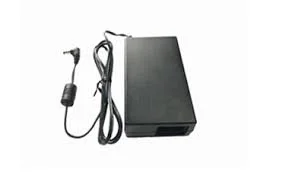
H3C
ADP040-54V-GL
H3C Power Adapter ADP040-54V-GL 54V 0.74A 40W Power Adapter For Indoor Access Point
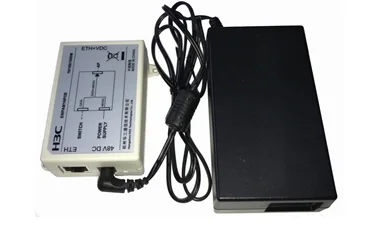
H3C
ADP040-54V-POE-GL
H3C Power Adapter ADP040-54V-POE-GL 54V 0.74A 40W Power Adapter For Indoor Access Point
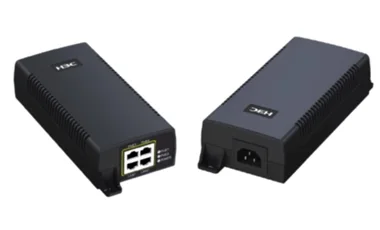
H3C
ADP060-55V-POE-GL
H3C Power Adapter ADP040-54V-POE-GL Dual Port 55V 1.1A 60W Power Adapter For Indoor Access Point

H3C
ANT-2510P-M4
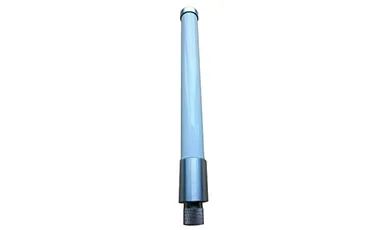
H3C ANT-2510P-M4 Dual-Band Omnidirectional Antenna Type N Male Connector Enterprise Outdoor Omnidirectional Antenna
H3C
ANT-2547V
H3C ANT-2547V Dual-Band Omnidirectional Antenna Type N Male Connector Enterprise Outdoor Omnidirectional Antenna
About Wireless Access Points from ImportGM
Enterprise Wi-Fi 6 / 6E / 7 access points, outdoor radios and WLAN controllers from Cisco, Ruckus, Aruba, H3C, Huawei, Alcatel-Lucent and Ubiquiti.
Browse all Wireless Access Points →